

AI Literacy + Digital Wellbeing for Year 4-6s
Practical, engaging presentations that give students the AI literacy and digital wellbeing skills to question what they see, understand the technology they use and make better decisions about when and how to use it.
AI Literacy and Digital Wellbeing
AI literacy cannot start in high school.
Recently, I asked a group of Year 12s what they thought AI literacy should look like in schools. They were crystal clear: it needs to start earlier.
They were concerned about how quickly young people are becoming used to asking AI for answers, relying on it to do difficult thinking for them, and trusting information without really understanding where it has come from.
And even if your primary students are not using ChatGPT at school, they are already encountering AI.
It is appearing at the top of their Google searches. It is built into games and platforms they use at home. It is increasingly shaping the YouTube videos and online content they watch. And AI chatbots are becoming part of the digital world they are growing up in.
We cannot wait until students are already relying on these tools to teach them how to think critically about them.
AI literacy at this age should not be about teaching children how to become better prompters.
It should be about helping them understand, in an age-appropriate way, what AI is, how it comes up with answers, why it gets things wrong, what information is safe to share and why they still need to think, question and check for themselves.
These presentations build those foundations early, before AI becomes an even bigger part of how students learn, search, create and communicate.
In a world where AI can give children an answer in seconds, we need to make sure they still know how to think for themselves.
Primary school is an opportunity to challenge those assumptions before they become normal.
Students do not need every technical detail about artificial intelligence.
They need simple, age-appropriate mental models that help them understand what these tools can and cannot do, and habits that encourage them to question, check and think before accepting the easiest answer.
Why Start in Primary School?
Once students become used to reaching for AI every time something feels difficult, it becomes much harder to undo that habit.
The same is true of the assumptions they form about technology.
If AI says it, it must be true.
If something looks real, it probably is.
If I tell an AI something, it is private.
If AI can do it for me, why would I do it myself?
Through interactive presentations, I teach students the AI literacy and digital wellbeing skills they need to thrive in the online world.
Students will learn:
💡How to use AI responsibly
🧠Build critical thinking skills
⚠️Online safety risks with AI
📱Reduce their screen time

















Tech Smart Kids in the Age of AI
Best for: Year 4-6s
Foundational AI literacy for Years 4-6
AI can sound right and still be wrong. It can create things that look real when they are not. It is not automatically private. And just because AI can do something for you does not mean it should.
Tech Smart Kids in the Age of AI introduces Years 4-6 students to the AI literacy skills they need before using these tools becomes second nature.
Students learn what is actually happening when an AI gives them an answer, how these systems learn from enormous amounts of information, and why an answer that sounds confident is not necessarily correct.
We also explore some of the habits I want students to develop early: checking before trusting, protecting their personal information, questioning what they see online and recognising the difference between using AI to help them think and using AI instead of thinking.
The goal isn’t to make primary students experts in AI.
It’s to make them critical users of it.
Students will learn:
How AI models are trained and come up with answers
Why AI can confidently produce incorrect or completely invented information
Why AI-generated images, videos and information can look real even when they are not
What personal information should not be shared with AI
Why relying on AI for every answer can affect learning and problem-solving
Simple ways to question information generated by AI
How to recognise when AI is helping them learn and when it is doing the thinking for them
High School Ready: Digital Skills
Best for: Year 6s
Digital skills to transition to high school
Moving into high school means more independence, more devices, more online learning and more responsibility for managing distractions. Students need to know how to use technology for school without letting notifications, gaming, social media and constant switching take over their attention.
High School, Tech Smart prepares Year 6 students for the digital skills and habits they will need in high school. Students learn how technology is designed to capture their attention, how to manage distractions, when different tools genuinely help with learning, and how to become more deliberate users of technology as they take on greater independence.
Students will learn:
Understand the digital expectations of high school
Manage notifications, distractions and competing platforms
Use practical strategies to focus during study and homework
Recognise when technology is helping or interrupting their learning
Build healthier habits around gaming, social media and devices
Take more responsibility for how they use technology
Dopamine Hackers
Best for: Year 4-6s
Gaming, YouTube and healthier technology habits
Most students already know they spend too much time on their devices.
But telling them to turn off YouTube or stop playing games does not necessarily make them want to change anything.
The lightbulb moment comes when they understand why these platforms are so hard to put down.
These platforms are designed to keep people watching, clicking and playing. The longer we stay, the more valuable our attention becomes.
Dopamine Hackers pulls back the curtain on those design tricks in a way primary students can understand.
Students explore how rewards, autoplay, endless content, streaks, notifications and other features encourage them to keep going, before learning practical ways to make their devices less distracting and take back some control.
This is a session about helping students understand how the technology is influencing their behaviour so they can make a more deliberate choice about how they use it.
Students will learn:
Why gaming and video platforms want to keep them watching and playing
How platforms make money from attention and engagement
The tricks platforms use to make it difficult to stop
How rewards and dopamine can shape digital habits
Why boredom and brain rest actually matter
How constant stimulation can make it harder to focus
Practical ways to make devices and apps less distracting
Strategies to build healthier screen habits without giving technology up completely
Keeping Your Kids Safe in the Age of AI
Parent Presentation
Best for parents, grandparents and caregivers:
Children's first experiences with AI are not necessarily happening in the classroom.
They are happening at home, through Google searches, YouTube, games, chatbots, devices and online platforms that are changing faster than most parents can realistically keep up with.
This makes parents an essential part of this education.
Keeping Your Kids Safe in the Age of AI gives parents a practical update on the technologies and risks children are encountering, including AI companions, deepfakes, AI-generated content, privacy risks and emerging platforms.
This is a highly practical session for parents which unpacks the latest cyber risks, trend sand platforms they need to understand to keep their kids safe online. This session provides tools to set & enforce boundaries with tech use at home that parents can implement immediately.
Parents will:
Understand how young people are using AI
Learn about AI companions and the risks of emotional reliance
Understand deepfakes and AI-generated image abuse
Learn about privacy risks when children use AI tools
Understand why AI-generated content makes critical thinking more important
Learn practical ways to talk about AI, privacy, safety and trust
Parents also receive a Digital Parenting Toolkit with practical conversation starters, family activities, templates and resources to continue these conversations at home.
“Paris’s online safety presentation was a
hit with the parents!”
~ Amanda Marocchi, Deputy Head of Middle School, Scotch College
“The student sessions were great, but I was blown away by the level of detail and number of practical strategies that caregivers could implement from Paris’s parent information evening.”
~Paul Beecham, Associate Principal, Alkimos College
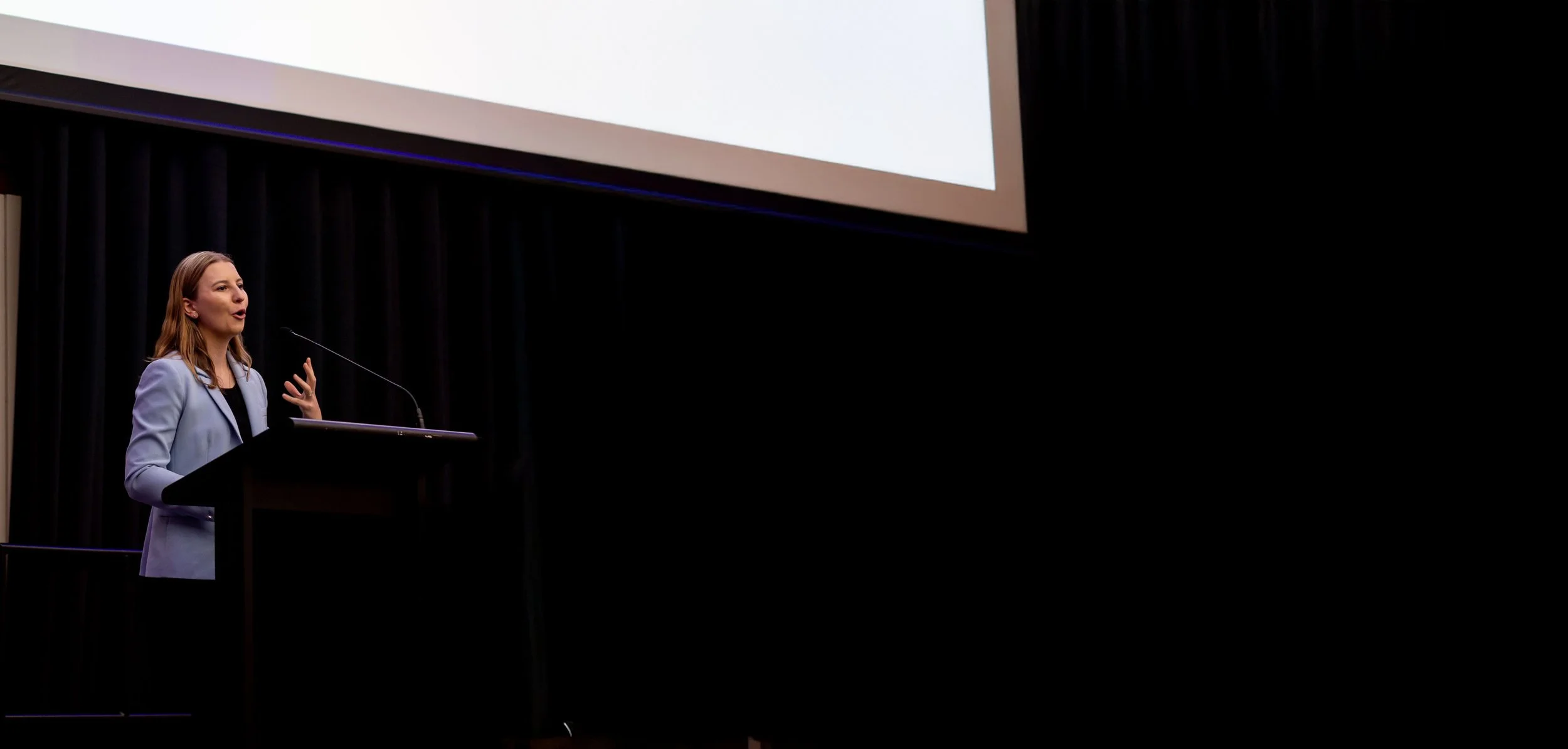
Why students actually listen:
These are not your usual cyber safety presentations.
Paris speaks to thousands of students every year about the latest tech, online safety and AI, and has consulted hundreds of Western Australian young people about AI, education, social media and their online habits.
As a Gen Z educator, she has grown up with the technology she speaks about. She speaks students’ language and combines that lived experience with her legal background to turn complicated issues into exciting presentations students actually want to engage with.
Paris McNeil is a 2026 Young Australian of the Year nominee, was shortlisted for the 2026 Western Australian of the Year Awards and was a finalist in the 2026 Young Achiever Awards Young Woman Leader category.
Why primary teachers love these presentations:
Technology is changing faster than teachers and schools can keep up.
Teachers are increasingly expected to help students navigate AI alongside everything else already being taught. These presentations give schools a way to provide current, engaging AI and digital wellbeing education without expecting every teacher to become an expert in every new platform or risk.
The aim isn't for students to leave knowing more AI tools.
It is for them to leave more willing to question an answer, more careful about what they share, more aware of how technology influences them and more confident using their own brain first.
Because the best time to teach students not to outsource their thinking to AI is before it becomes a habit.

Praise for Paris McNeil
Family Tech Agreement Template
Download this template Family Tech Agreement to set or reset the ground rules when it comes to devices and screen time in your family.
