
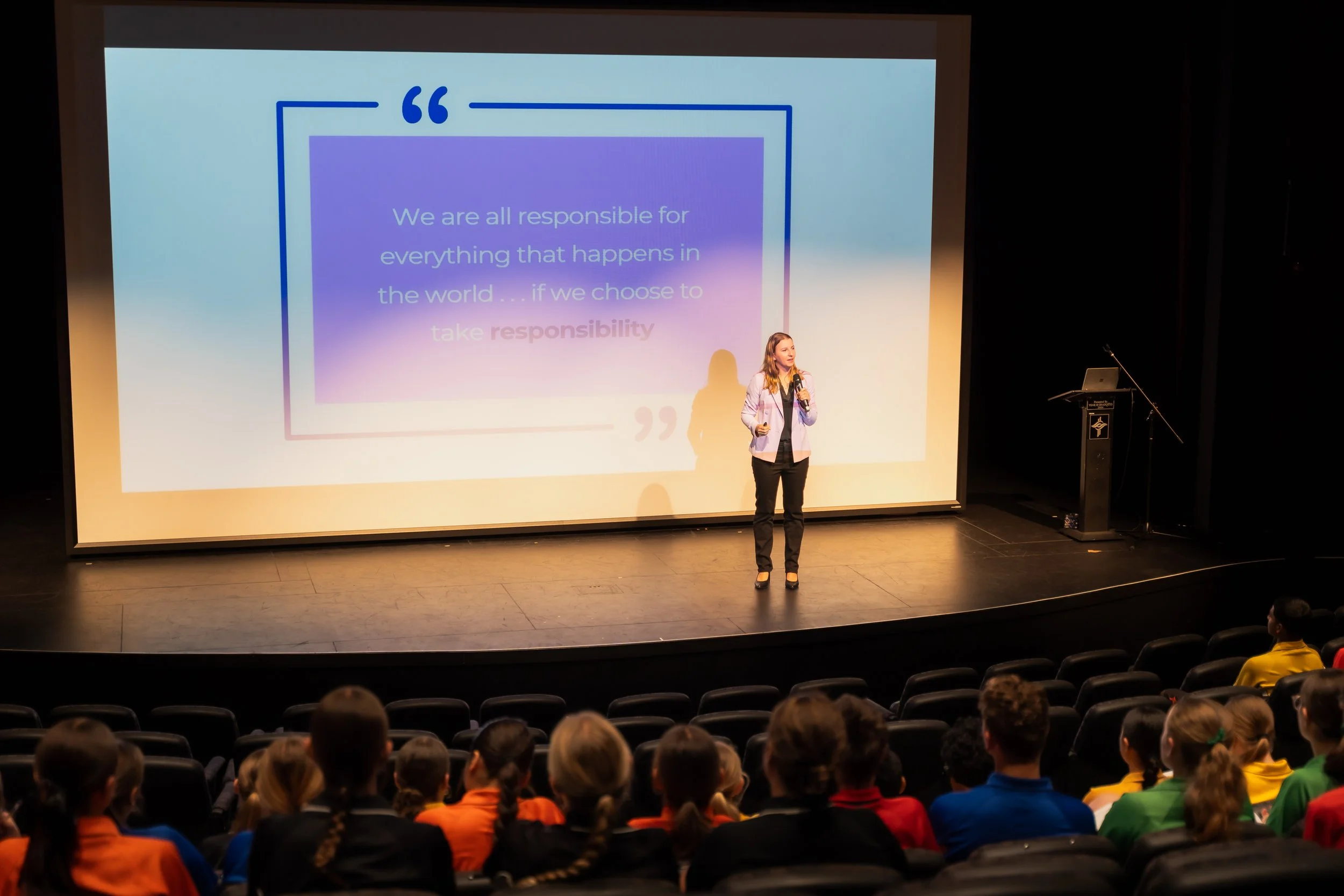
Taking Personal Responsibility
Empower students to take charge of their actions, make informed choices, and create a positive impact in their school, communities and the world.
Taking Personal Responsibility
Schools everywhere are grappling with a growing sense that students are feeling hopeless about their future, disheartened about what they can do about it, and increasingly slipping into learned helplessness rather than seeing themselves as capable of shaping their own future.
I help schools equip students with the tools, language and mindsets to take responsibility, accountability and ownership for their actions and their impact, both in the classroom and across the wider school community.
This program is designed for schools that are serious about teaching students to step up, take initiative, and understand that leadership is not a badge, but the way you show up every day through your choices and behaviour.
Student leadership teams represent a huge and often underutilised opportunity for creating change. These students care deeply about their schools and are usually full of ideas, yet they are rarely positioned or supported as genuine agents of cultural and behavioural change. This program reframes student leaders from being symbolic representatives to becoming practical drivers of improvement across the school.
What you get from this program is students who are more willing to own their choices, more confident using their voice in a constructive way, and more likely to step forward when something needs to change rather than sitting back and waiting. It helps schools build a culture where students see themselves as active contributors, not passive passengers, and where student leaders are genuinely shaping behaviour and culture, not just wearing the badge.
This program is a good fit if:
You are seeing students default to “someone else will fix it” rather than taking responsibility themselves
Students have a passive attitude towards their learning, behaviour or leadership
You want students to be more proactive, accountable and resilient, not just compliant
Leadership roles feel symbolic rather than creating meaningful change
You want student leadership to shape culture and behaviour, not just wear a badge
You are looking for a proactive culture shift across the school, not just reactive interventions
What this program includes
Impactful workshops for student leadership teams that position them as genuine agents of change, equipping them to take ownership and accountability for the initiatives they lead and the culture they shape in their roles.
Student sessions delivered across year groups that move students away from excuses, blame and denial, and towards taking responsibility for their actions, choices and impact on others.
Language, tools and practical resources that help students build ownership and accountability in everyday situations, while also becoming more hopeful and ambitious about their careers, pathways and the future they can create.
Shared language and guidance for staff and parents to reinforce responsibility, independence and agency consistently, so students receive the same messages at school and at home.
A whole-school approach that builds a culture of personal responsibility and empowers students to see themselves as capable of shaping their own future, rather than waiting for it to happen to them.
Choose the level of support that’s right for your school:
LEVEL 1: Student Leadership Foundations
Best for:
Schools looking to strengthen their student leadership teams and develop students who understand leadership as responsibility, not just a role or title.
-
Includes:
Workshops delivered specifically for student leadership teams
Teaching leadership through the lens of service to others and making meaningful change
Tools for decision-making, influence and accountability
A practical framework for running meetings and turning ideas into action
Language student leaders can model and use with their peers
Realistic scenarios relevant to school leadership roles
-
Outcome:
Student leaders develop the mindset, language and skills to lead by example, take ownership of their roles, and positively influence school culture through their actions, not just their position.This program builds strong foundations within the student leadership team and empowers them to be an agent of cultural change, but does not yet create consistency across the wider student body or staff.
LEVEL 2: Student Responsibility
Best for:
Schools that want to upskill their student leaders as well as influence the wider student body, to take responsibility, accountability and ownership for their actions.
-
Includes:
Workshops for student leadership teams
Student sessions delivered to Year 7–12 cohorts
Shared language around responsibility, ownership and accountability across year levels
Practical tools students can use to take responsibility for their actions and choices
Clear links between leadership, behaviour and everyday student expectations
-
Outcome:
Students across all year groups are empowered to take responsibility, ownership and accountability for their actions, with student leaders actively championing and modelling this cultural shift across the school.
LEVEL 3: Whole-School Responsibility & Ownership
Best for:
Schools that want responsibility, accountability and ownership embedded consistently across students, staff and families, rather than taught in isolation or only at certain year levels.
-
Includes:
Workshops for student leadership teams.
Student sessions delivered to Year 7–12 cohorts.
Professional learning for staff to align how responsibility and agency are taught, reinforced and expected.
Shared language and clear expectations used consistently across the school community.
Parent-facing messaging to support independence, responsibility and confidence at home.
A whole-of-school approach with clear links between leadership, behaviour, wellbeing and learning.
-
Outcome:
A consistent whole-school culture where students are supported and expected to take responsibility for their learning, behaviour and choices, staff reinforce responsibility through everyday practice, and parents are equipped with language and tools to encourage independence and accountability beyond the school gates.
Other topics you may like:

-

Digital Wellbeing & Citizenship
The social media ban has changed the way kids use tech, but it hasn’t removed online risks.
This program supports schools to proactively help students, staff, and families to build healthy tech habits, rather than responding to reactively to pastoral care issues.
-

Building a Whole-of School Approach to AI
AI is already part of students’ learning, whether schools are actively using it or not.
This program helps schools move from uncertainty and mixed messages to a clear, confident, and practical approach to AI that supports teaching, learning, and wellbeing.
-

Taking Personal Responsibility
More than ever, students feel demoralised and hopeless. Students are struggling to think big about their future, and take ownership of their choices.
This program empowers schools to help students take responsibility for their actions, make informed choices, and create a positive impact on their community.